

- It is sent to all contacts in the selected audience, including unsubscribed contacts. The Subscribed status check is bypassed.
- All marketing-related headers and footers are removed. This includes the automatic footer, so your company address and unsubscribe link are not added to the email.
- Suppression. Suppressed contacts are known bad addresses (hard bounces and complaints), so they will not receive critical notices.
- Mailing list unsubscribes. If you send a critical notice to a mailing list, contacts who have unsubscribed from that list will not receive it. To reach all of your contacts, send the notice to your whole audience instead of a mailing list.
When to use a critical notice
Critical notices are appropriate for messages your users need to receive for legal or compliance reasons, such as:- Changes to your terms of service or privacy policy
- Changes to your list of subprocessors
- Data breach or security incident notifications
Sending a critical notice
Critical notices are enabled on a per-campaign basis by our team.Request a critical notice
- Create a campaign with your notice content, following the best practices below.
- Contact us at help@loops.so or via the chat widget in the Loops app, and let us know which campaign you want designated as a critical notice.
- Once we have marked the campaign as a critical notice, you can review and send it as normal.
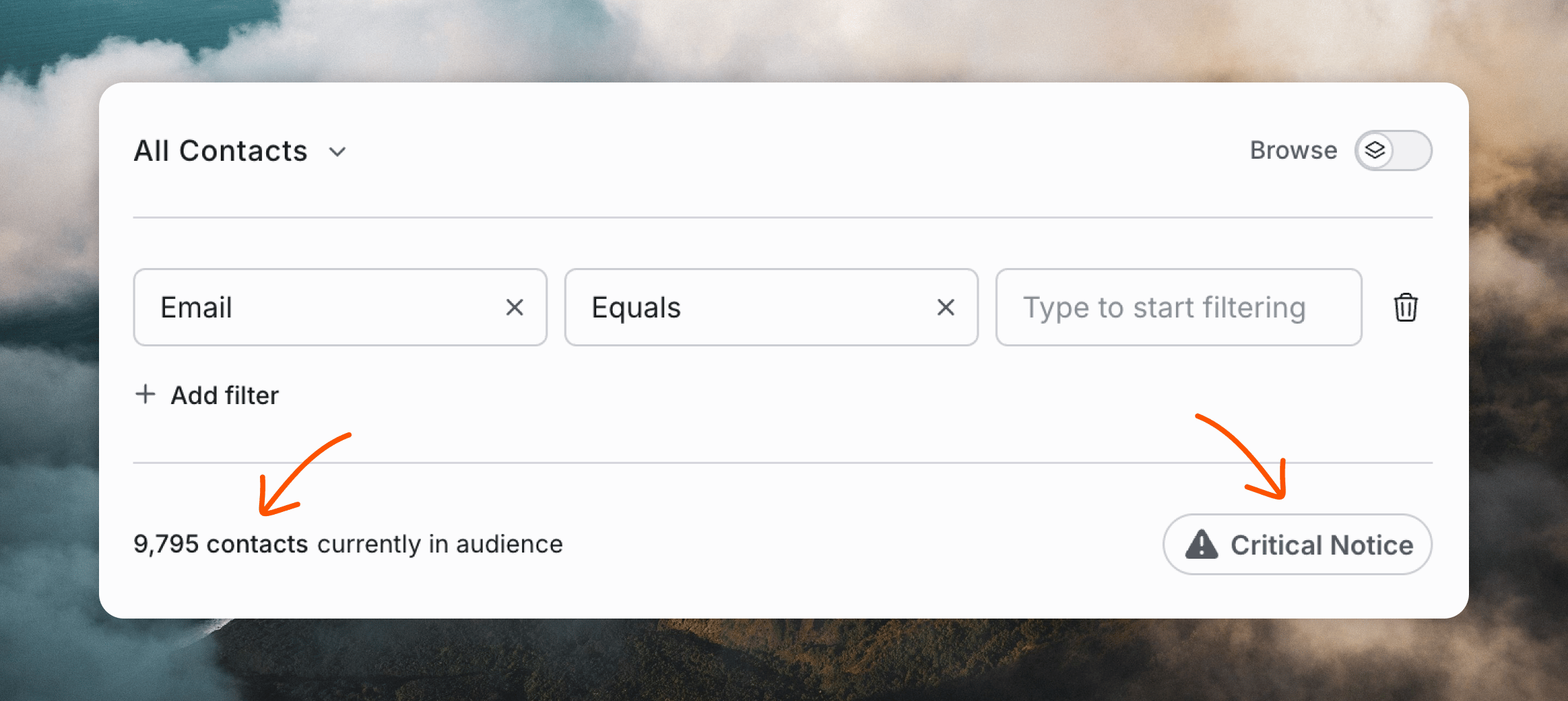
Mark a campaign as a critical notice yourself
For teams who need to send critical notices on a regular basis, we can also enable the option for you to mark campaigns as critical notices yourself. This is enabled on a case-by-case basis and requires manual approval. Contact us if this would be useful for your team. Once this option is enabled, you’ll see a Critical Notice toggle on the Audience step of your campaign, at the bottom right of the audience criteria panel. Turn it on to send the campaign as a critical notice.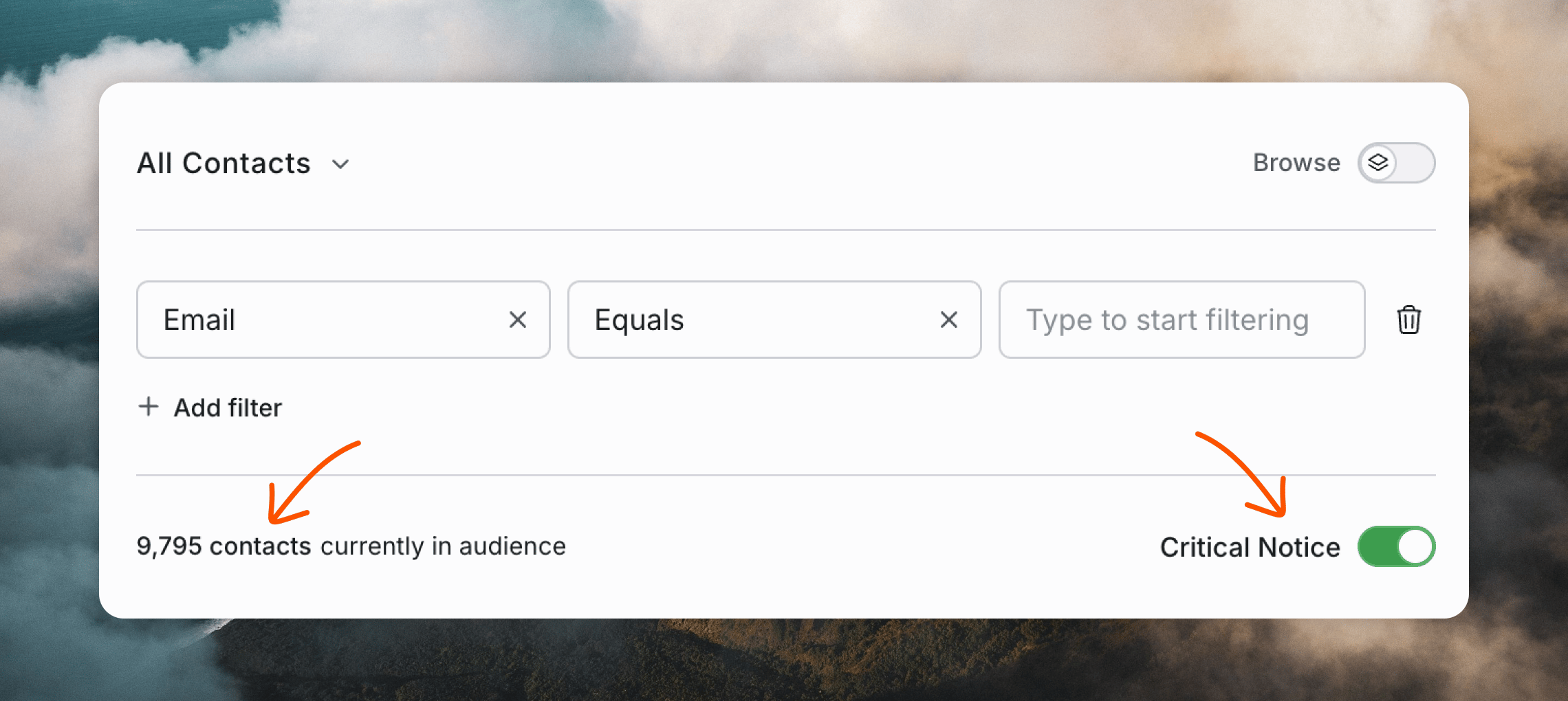
Best practices
Because critical notices reach contacts who have opted out of your marketing email, it’s important that they are clearly identifiable as important, non-promotional messages. This helps recipients recognize the email and protects your deliverability.Use Plain mode
Send your notice as a Plain email. Plain emails look like messages sent from a regular email client, which helps with deliverability and makes the notice feel less like marketing.Explain why the recipient is receiving it
State clearly in the email why the recipient is receiving this notice and that it is legally required. Recipients who have unsubscribed from your marketing email may otherwise be confused about why they are hearing from you.Use a descriptive From name
Set the Name in your sending settings to something that clearly describes your relationship with the recipient, and that is distinct from the name you use for marketing email. For example:Acme: Notification
Write a clear subject line
Use a clear and concise subject line that makes it obvious the email is important and distinctly different from your other communications. For example:Important: Updates to our Terms of Service