

Authentication
Generate an API key at Settings -> API in Loops. Make sure to copy the key and keep it in a secure place. You will not be able to access it again. Include your API key as a Bearer token in theAuthorization header on each request.
You can test your API key by making a GET request to the API key endpoint:
Testing and development environments
Loops doesn’t have a separate sandbox or staging environment. To keep development activity from affecting your production audience and sending reputation, create a new team for each environment. Create a new team with a new domain. If you want to use the same apex domain as your main account, get in touch with our support team. When testing, you can send to@example.com and @test.com addresses. API calls that create contacts, send events, or send transactional email will return normal success responses for these addresses, but no email will actually be delivered. This lets you exercise your integration end-to-end without affecting your sending domain’s reputation. See Testing workflows and Testing transactional emails for details.
API Reference
The base URL for the API ishttps://app.loops.so/api
API key
Test your API key.Test API key
Audience segments
View audience segments for campaign targeting.Get audience segment
List audience segments
Create audience segment
Campaign groups
Organize campaigns into groups.Create campaign group
Update campaign group
Get campaign group
List campaign groups
Campaigns
Create and manage campaigns.Create campaign
Update campaign
Get campaign
Get campaign metrics
List campaigns
Configuration
View configuration settings.List dedicated sending IP addresses
Contact properties
Manage contact properties.Create contact property
List contact properties
Contacts
Manage contacts.Create contact
Update contact
Find contact
Delete contact
Check contact suppression status
Remove suppression for a contact
Components
Reusable components for your emails.Create component
Update component
Get component
List components
Email messages
Manage the content of campaigns and transactional emails.Update email message
Get email message
Send a preview email message
Render an email message as HTML
Run Guardian checks
Event patterns
View workflow event patterns.List event patterns
Get event pattern
Get event pattern by name
Events
Send events to trigger workflows.Send event
Mailing lists
View your mailing lists.List mailing lists
Themes
Retrieve email themes.Create theme
Update theme
Get theme
List themes
Transactional emails
Create, manage and send transactional emails.Send transactional email
Create transactional email
Update transactional email
Ensure transactional email has draft
Publish transactional email
Get transactional email
Get transactional email metrics
List transactional emails
List transactional emails (legacy)
Transactional groups
Organize transactional emails into groups.Create transactional group
Update transactional group
Get transactional group
List transactional groups
Uploads
Upload images for email messages.Create upload
Complete upload
Workflow groups
Organize workflows into groups.Create workflow group
Update workflow group
Get workflow group
List workflow groups
Workflow nodes
View and mutate workflow nodes.Create workflow node
Add a branch
Update workflow node
Get workflow node
Get workflow node metrics
Reroute a node connection
Delete workflow node
Delete workflow nodes recursively
Workflows
View and manage workflows.Create workflow
Update workflow
Get workflow
List workflows
Change workflow mailing list
Delete workflow
Rate Limiting
To ensure the quality of service for all users, our API is rate limited. This means there’s a limit to the number of requests your application can make to our API in a certain time frame. The baseline rate limit is 10 requests per second per team. For the content API, the baseline rate limit is 60 requests per 60 seconds per team. This applies to/v1/campaigns/*, /v1/campaign-groups/*, /v1/components/*, /v1/email-messages/*, /v1/themes/*, /v1/transactional-emails/*, /v1/transactional-groups/*, /v1/uploads/*, and /v1/workflows/* endpoints.
Rate Limiting Details
Rate Limiting Details
To see your current usage, we provide the following response headers in every API response: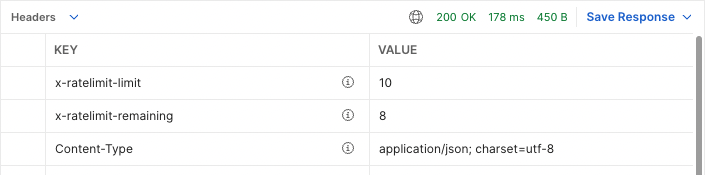
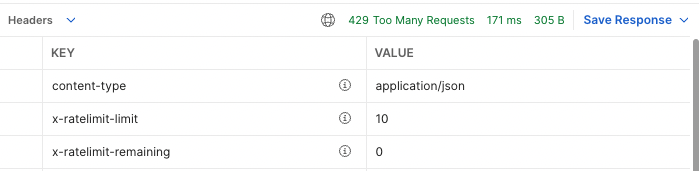
x-ratelimit-limit: The maximum number of requests you can make per second.x-ratelimit-remaining: The number of requests remaining in the current rate limit window.
429 Too Many Requests. Here is an example of a failed response with rate limit headers:Debugging
Sometimes things go wrong. Here are some tips to help you debug your API requests.Debugging Steps
Debugging Steps
If you are having trouble with the API, we recommend using a tool like Postman to test your requests.Dealing with
Make sure you have generated an API key from Settings -> API and that you are including it in your requests.Your API key should be included in the “Authorization” header of your request, following the format Handling rate limiting (
The Loops API allows a maximum of 10 requests per second per team. If you receive a Handling other
If you receive this error, it means that a value in the request body is too long. We support a maximum of 500 characters for each value, including the opening and closing quotes. Please reduce the length of the values in your request and try again.
If you have followed these steps and are still experiencing issues, don’t hesitate to reach out to the Loops team for further assistance.
Handling CORS errors
The Loops API does not support cross-origin requests made from client-side JavaScript. To avoid CORS errors, make sure to issue your requests from a server-side application.Dealing with 401 Unauthorized “Invalid API key” errors
Make sure you have generated an API key from Settings -> API and that you are including it in your requests.Your API key should be included in the “Authorization” header of your request, following the format Authorization: Bearer YOUR_API_KEY.Handling rate limiting (429 Responses)
The Loops API allows a maximum of 10 requests per second per team. If you receive a 429 Too Many Requests response, this means you have exceeded this limit.The x-ratelimit-limit and x-ratelimit-remaining headers in the response can provide information about your current rate limit usage.Handling other 400-level Responses
400-level responses typically indicate that there was a problem with the request. The response body will contain more information about what went wrong, so be sure to check it for details.Check your request type (GET, POST, PUT, DELETE) and ensure that you are using the correct one for the endpoint you are trying to access.Some body key or value is longer than allowable
If you receive this error, it means that a value in the request body is too long. We support a maximum of 500 characters for each value, including the opening and closing quotes. Please reduce the length of the values in your request and try again.If you have followed these steps and are still experiencing issues, don’t hesitate to reach out to the Loops team for further assistance.
OpenAPI spec
Get started quickly with the Loops API using our OpenAPI documents. You can import these documents into an API client like Postman or Insomnia to see and use all of our endpoints, with example requests and expected responses.- YAML: app.loops.so/openapi.yaml
- JSON: app.loops.so/openapi.json
SDKs
SDKs are software packages built on top of the API, making it easier to integrate into your project.Go
The official Go SDK for Loops.
JavaScript
The official JavaScript/TypeScript SDK for Loops.
Nuxt
The official Nuxt module for Loops.
PHP
The official PHP SDK for Loops.
Ruby
The official Ruby SDK for Loops.
Unofficial SDKs
The following SDKs are community-submitted and have not been officially reviewed or endorsed by Loops. We recommend thoroughly testing and reviewing the code before integrating it into your project.- Laravel by PlutoLinks
- PHP by PlutoLinks
- Ruby on Rails by Daniel Friis